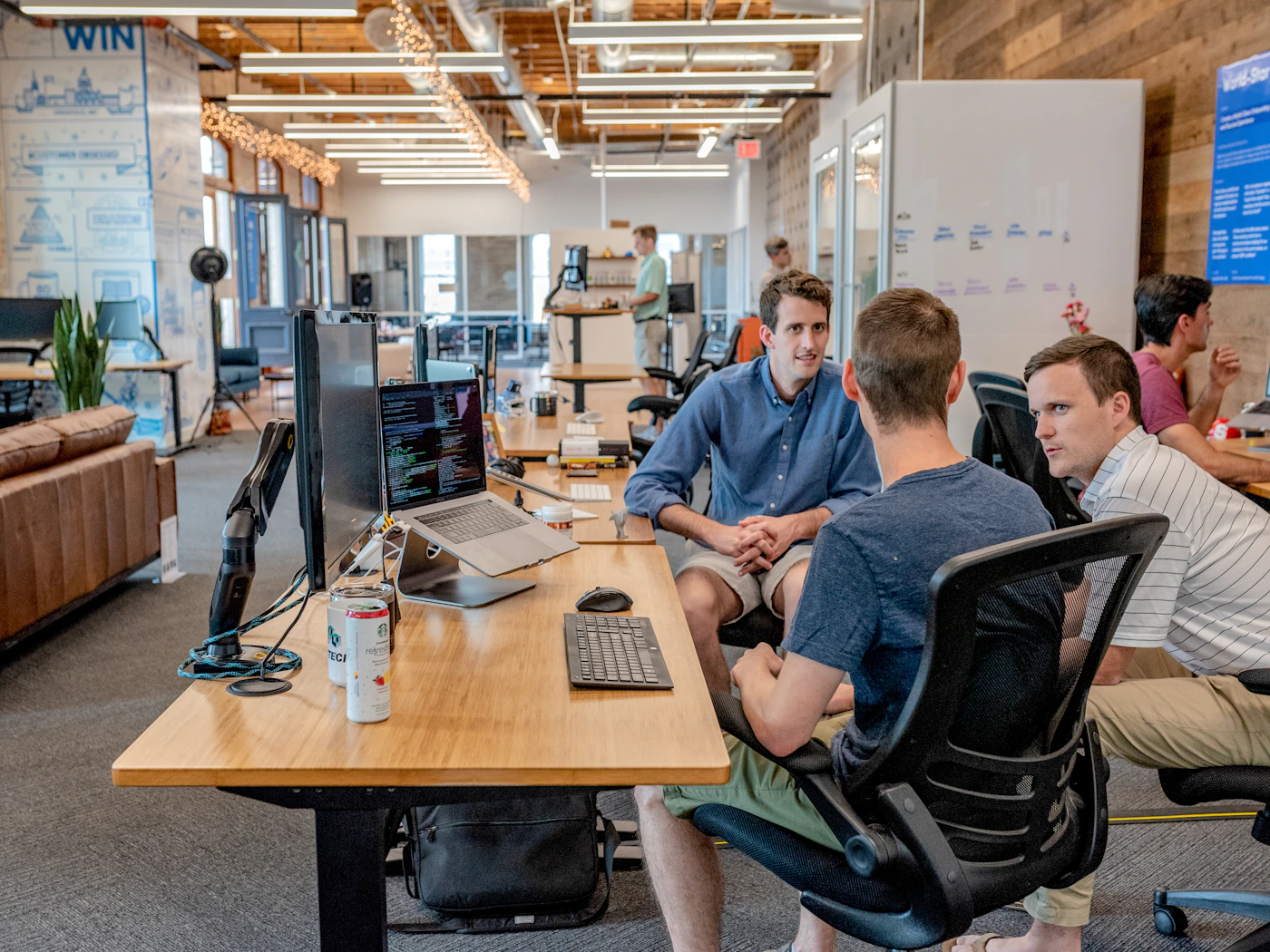
A team can look busy all day and still produce very little that matters.
Messages flying. Meetings stacked. Tabs multiplying. Status checks everywhere. Everyone appears responsive, yet nobody feels truly effective. That is usually not a motivation problem. It is a systems problem. More specifically, it is a context switching problem disguised as collaboration.
If you are searching for a team focus system to reduce context switching, you likely already feel the hidden cost: work starts harder, thinking feels shallower, and even talented people begin operating below their actual cognitive capacity. In modern work, the biggest threat to output is not always lack of effort. It is attention fragmentation.
If your team needs a better evidence-based way to protect focus, track execution, and reduce cognitive leakage, FocusTrack can help create that operating layer: https://focustrack.ai
Quick answer: what is a team focus system?
A team focus system is a set of shared rules, workflows, communication norms, and meeting structures designed to reduce unnecessary task switching at work.
A good system helps teams:
- protect deep work blocks
- batch interruptions instead of scattering them
- use async updates instead of constant pings
- reduce tool hopping
- clarify priorities so people are not mentally reloading all day
- measure whether attention fragmentation is improving or getting worse
In short: context switching reduction for teams does not come from asking people to “focus harder.” It comes from redesigning how the team operates.
If your team is constantly responsive but rarely fully effective, the issue is probably not effort. It is the operating system around attention.
What context switching actually does to team performance
Most articles explain context switching as simply “switching between tasks.” True, but incomplete.
The real damage is not the switch itself. It is what lingers after the switch.
Cognitive science often refers to this as attention residue: part of your mind stays attached to the previous task even after you move on. So when someone jumps from writing a proposal to answering Slack messages to joining a meeting to reviewing numbers, they do not return with full cognitive power each time. They return partially loaded, mentally split.
At the team level, this compounds fast.
One interruption affects one person.
Ten interruptions affect the rhythm of an entire system.
This is where most teams misdiagnose the problem. They treat visible delays as planning issues when the deeper issue is what I’d call coordination fragmentation: too many micro-demands arriving in too many channels at too many times. The team is not overwhelmed by hard work alone. It is overwhelmed by constant mental re-entry.
Every interruption has two costs: the moment you lose and the depth you fail to regain.
That second cost is why shallow days feel exhausting even when little meaningful work gets finished.
Insight
Productivity loss often hides inside transition load, not just task load. Teams feel busy because they are constantly restarting thought, not because they are steadily advancing important work.
Why most teams accidentally create attention fragmentation
Very few teams intend to destroy focus. They just normalize behaviors that make deep work nearly impossible.
Here are the most common causes:
1. Chat becomes the default control center
When everything is urgent in chat, nothing is truly prioritized. People begin working in reactive mode instead of deliberate mode.
2. Meetings cut the day into unusable fragments
A 30-minute meeting rarely costs only 30 minutes. It often destroys the 45 minutes before it and the 30 minutes after it because nobody wants to start something cognitively demanding in between.
3. Work lives across too many tools
Task manager in one app. Decisions in chat. Docs somewhere else. Updates buried in email. Teams waste attention reconstructing context instead of using it.
4. Managers request live updates too often
Frequent status checks may feel like stewardship, but they often generate verification debt: extra cognitive effort spent proving progress instead of making progress.
5. Priorities shift without containment
When priorities change hourly, people stop building mental runways for deep work. They wait for interruption because interruption feels inevitable.
This matters even more in the AI era. Abundant tools create abundant prompts, summaries, notifications, drafts, suggestions, and follow-up loops. Intelligence may be everywhere now, but execution still depends on human attention being stable enough to direct it well.
Build a calmer execution layer
If your team needs a better evidence-based way to protect focus, track execution, and reduce cognitive leakage, FocusTrack can help create that operating layer.
The core elements of a team focus system
If you want to know how to build a team focus system that reduces context switching at work, start here. A strong system has five parts.
1. Shared priority clarity
People switch contexts more when they are unsure what deserves sustained attention.
Every team should define:
- top 1–3 priorities for the week
- who owns what
- what does not need action right now
- what qualifies as urgent vs non-urgent
Ambiguity creates voluntary checking behavior. When people are unclear, they refresh inboxes and scan channels because uncertainty feels threatening.
Clarity reduces scanning.
Scanning reduces switching.
Switching reduction protects depth.
2. Protected deep work windows
Teams need explicit no-interruption blocks on the calendar.
This can be:
- daily focus blocks from 9:00–11:30
- no-meeting mornings
- one full quiet half-day each week
- rotating maker time by function
The key is shared protection. Individual calendar blocking helps, but if the surrounding culture ignores it, it fails.
A protected block only works when everyone agrees:
“If it can wait, it waits.”
For related individual focus strategies in remote environments, see Overcoming Cognitive Overload: How to Manage Digital Distractions for Deep Focus in Remote Work.
Protected focus time only works when it is culturally shared. A blocked calendar means little if the team still treats interruption as normal.
3. Communication rules by urgency level
One major reason context switching productivity research keeps surfacing this issue is simple: many teams lack channel discipline.
Create three lanes:
Immediate
Only true blockers or critical incidents.
Expected response: fast.
Same day
Useful but non-critical questions.
Expected response: during designated check windows.
Async
Updates, ideas, documentation, planning notes.
Expected response: reviewed during scheduled processing time.
The goal is not slower communication.
It is cleaner communication timing.
Without this structure, every message borrows urgency from proximity.
4. Meeting design that protects cognitive flow
Most teams do not need fewer conversations.
They need fewer disruptive conversations.
Use these rules:
- Group meetings into specific windows instead of sprinkling them across entire days
- Require agendas before meetings
- Cancel any meeting that exists only for status sharing
- End with written owners and next actions
- Default recurring meetings to shorter durations unless complexity demands more time
A useful test:
Does this meeting create clarity that outweighs its breakage cost?
Breakage cost includes lost focus momentum before and after the meeting—not just time inside it.
5. Visible evidence of progress
One reason interruptions multiply is because leaders cannot see progress clearly without asking for it live.
This is where an execution truth layer matters. When progress becomes visible through clean updates and behavioral evidence rather than scattered pings, teams interrupt less because trust rises.
FocusTrack fits naturally here by helping individuals and teams create evidence of focused execution over time rather than relying on constant reactive check-ins: https://focustrack.ai
Insight
When progress is visible, trust rises. When trust rises, live verification drops. That is how better systems reduce interruptions without slowing execution.
How to set communication rules that reduce interruptions
Communication norms fail when they are vague. “Be mindful” is not a system.
Try this practical model:
The 3-check rule
Instead of checking chat constantly, team members process communication at three defined windows per day unless they are in an urgent-response role.
Example:
- 11:00 AM
- 2:00 PM
- 4:30 PM
This single shift dramatically lowers self-interruption behavior while preserving responsiveness where it matters.
The sender burden rule
The sender must make requests easy to process by including:
- clear ask
- deadline
- level of urgency
- relevant links or files in one place
This prevents “context scavenging,” another hidden source of mental drain where people waste energy hunting missing details before they can respond intelligently.
The escalation rule
If something requires immediate action:
label it clearly and explain why it cannot wait.
Otherwise it enters normal flow.
Urgency should be justified, not implied by notification design.
The goal is not slower communication. It is cleaner communication timing.
How to use async updates to protect deep work time
Async updates are one of the most powerful forms of context switching reduction for teams because they separate information transfer from immediate interruption.
Good async updates are:
- predictable
- standardized
- brief but sufficient
- tied to ownership and next steps
A simple format:
- What I completed
- What I’m doing next
- Where I’m blocked
- What needs no response right now
That final line matters more than most teams realize. Many messages accidentally invite interaction when none is needed yet.
Async works best when paired with written visibility rather than fragmented chat history alone. If your team struggles with AI noise or digital distractions around deep work sessions specifically, read How to Protect Your Focus from AI Distractions During Deep Work Sessions.
How managers can tell if context switching is actually falling
You do not need perfect analytics first. You need observable indicators.
Track signals like:
- number of meetings per person per week
- amount of calendar fragmentation
- average response expectation by channel
- number of ad hoc status requests
- frequency of tool hopping complaints
- percentage of uninterrupted focus blocks completed
- subjective end-of-day cognitive exhaustion
Also ask one powerful weekly question:
“Where did our workflow force unnecessary mental re-entry this week?”
That phrase—mental re-entry—is useful because employees often cannot articulate why a day felt terrible even when workload looked normal on paper. The issue was not only volume; it was repeated rebooting of thought states.
This opens an important management insight:
productivity loss often hides inside transition load more than task load.
That distinction changes everything about how you lead a knowledge team.
Insight
Ask teams where mental re-entry was forced this week. That question reveals hidden friction that ordinary productivity metrics often miss.
A simple weekly team reset for better focus
Here is a lightweight reset ritual you can run every Friday or Monday:
Team Focus Reset Agenda
- Identify last week’s biggest sources of disruption
- Review which meetings created value vs drag
- Clarify next week’s top priorities
- Lock protected deep work windows
- Decide which updates can move async
- Remove one unnecessary reporting loop
Do this in 20 minutes.
Then honor what you decided for five days straight.
Consistency matters more than complexity here. Great teams do not preserve attention through heroic self-control alone. They preserve it through repeatable environmental design.
For recovery support when fragmentation has already created fatigue across the week, Overcoming Digital Burnout: How Micro-Breaks Restore Focus in an AI-Driven Workday adds another useful layer.
Turn focus protection into a team habit
If you want your team to build stronger habits around attention protection, execution evidence, and consistent follow-through, explore FocusTrack here.
Conclusion: build a calmer system before asking people for more discipline
The modern workplace often rewards visible responsiveness while quietly punishing sustained thought.
That tradeoff looks efficient right up until quality drops, timelines slip, morale sinks, and smart people feel perpetually behind despite constant activity.
A real team focus system to reduce context switching solves this at the operating-system level.
It creates fewer false urgencies.
Fewer broken thought cycles.
Fewer invisible cognitive taxes.
More depth.
More trust.
More real output.
In other words: better execution through better attention design.
The future will belong less to teams with the most information and more to teams that can hold focus long enough to turn information into finished work.
If you want your team to build stronger habits around attention protection, execution evidence, and consistent follow-through, explore FocusTrack here: https://focustrack.ai
FAQs
What is context switching at work?
Context switching at work is shifting mental attention between different tasks, tools, conversations, or priorities. It reduces efficiency because your brain must unload one mode of thinking and reload another, often leaving behind attention residue that weakens focus on the next task.
Why does context switching hurt team productivity so much?
It hurts productivity because coordination compounds distraction. One interruption may seem small, but repeated switches across chat, meetings, tools, and status requests create fragmented days where people spend more energy restarting than progressing meaningfully.
How can managers reduce interruptions for employees?
Managers can reduce interruptions by setting urgency rules for communication channels, replacing live status checks with async updates, batching meetings into designated windows, protecting shared deep work time, and clarifying weekly priorities so employees do less reactive checking throughout the day.
What does a good team focus system include?
A good team focus system includes clear priorities, protected deep work blocks, agreed communication norms, better meeting design, structured urgency levels, async update practices, and visible progress so teams can reduce unnecessary switching and protect execution quality.