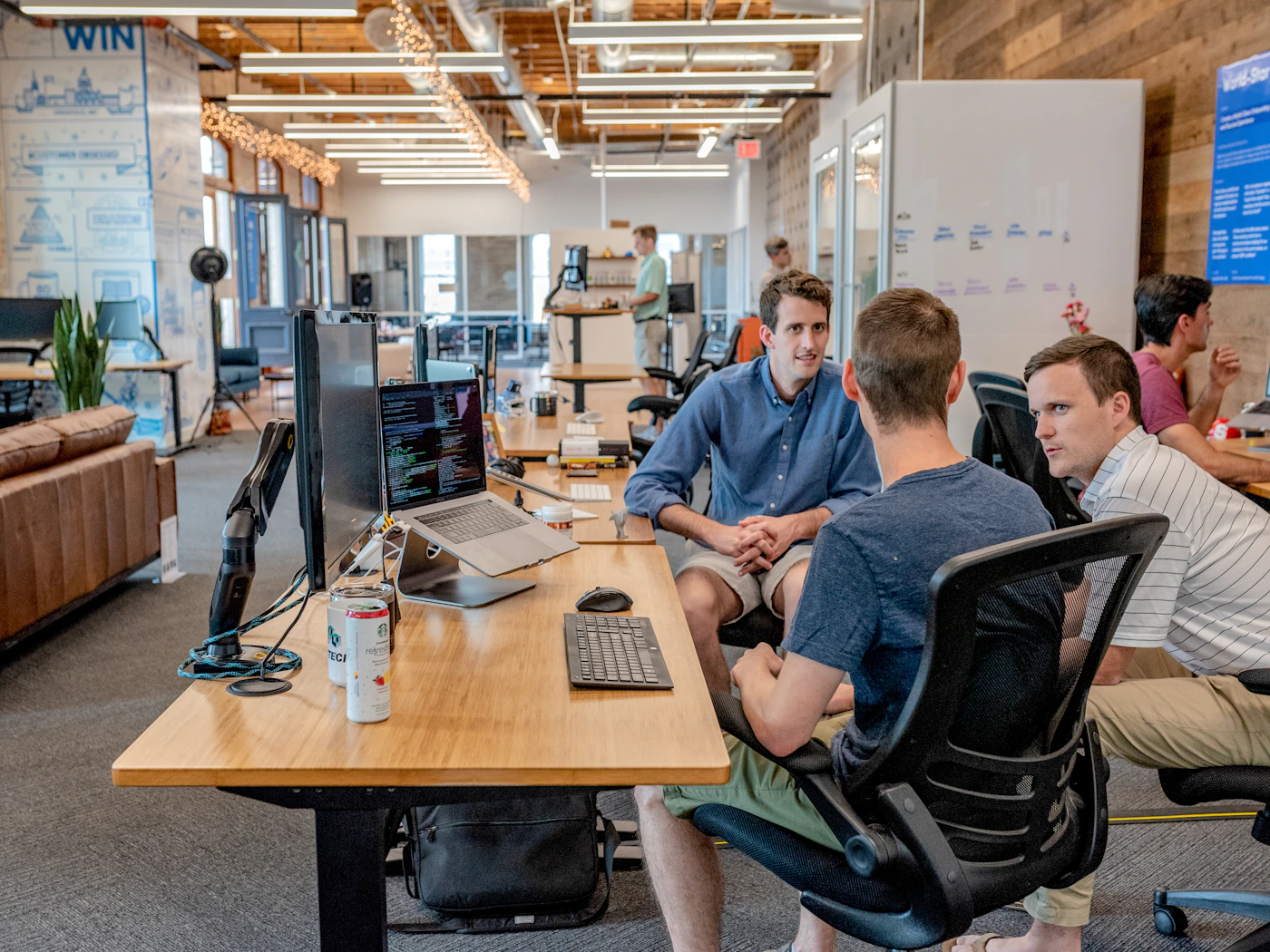
A lot of leaders know something is off before they can prove it. Deadlines slip. Meetings multiply. Slack never sleeps. People look busy, but meaningful work feels strangely scarce. That tension is what sends many companies searching for attention analytics for teams without surveillance.
And this is where good intentions often go bad.
When leaders can’t see focus, they’re tempted to monitor behavior: screenshots, keystrokes, webcam checks, idle-time scoring. But the moment a team feels watched, attention changes shape. It becomes defensive. Performance becomes theatrical. Trust erodes quietly, then all at once.
If you want a better path, FocusTrack helps teams build an evidence layer around execution without turning work into surveillance theater. Explore the privacy-first approach at https://focustrack.ai.
The short answer
If you’re wondering how to measure team focus without employee surveillance, the answer is this:
Measure patterns of work friction at the team level, not personal activity at the individual level.
That means tracking signals like meeting load, context switching, interruption density, deep work availability, cycle-time consistency, and after-hours spillover instead of monitoring screens, typing speed, or mouse movement.
This is what privacy-first team attention analytics should do: reveal whether the environment supports focus without treating people like suspects.
What attention analytics actually means for teams
Attention analytics is not mind reading. It’s not spying. And it should never become digital Taylorism dressed up as “productivity.”
In a healthy form, attention analytics for teams without surveillance means understanding how the work system shapes concentration.
The core question is not:
- “What was each employee doing every minute?”
It is:
- “What conditions are helping or hurting focused execution across the team?”
That distinction matters because knowledge work is cognitive work. The product is often invisible until it ships: judgment, synthesis, problem-solving, writing, prioritization, debugging, designing. Those things do not show up accurately through crude activity tracking.
A person can move their mouse all day and create nothing valuable. Another can stare out a window for twenty minutes and solve a problem that saves a quarter’s worth of wasted effort.
Focus is not visible through surveillance proxies.
The goal of attention analytics is not to expose people. It is to expose the conditions that make deep work easier or harder across the team.
Why employee surveillance damages focus, trust, and performance
Many competing articles frame this as mainly a privacy issue. It is that. But it’s also a performance issue.
Surveillance introduces what I’d call attention distortion: when people stop optimizing for real work and start optimizing for visible work.
That creates three problems fast:
1. It rewards performative busyness
People respond to what gets measured. If software rewards constant visible activity, workers learn to stay active-looking rather than cognitively effective.
2. It increases cognitive load
Being watched consumes mental bandwidth. Research in psychology has long shown that monitoring pressure can increase stress and impair higher-order thinking, especially where autonomy and creativity matter.
3. It destroys trust loops
Trust is an execution multiplier. Teams do better work when they feel safe to think deeply, experiment honestly, and communicate friction early. Surveillance breaks that loop by signaling suspicion first.
A watched employee does not become focused.
A watched employee becomes self-conscious.
In the AI era, this matters even more. As intelligence becomes abundant through tools and agents, human advantage shifts toward judgment, depth, verification, and sustained execution. Those qualities shrink under fear-based monitoring.
The difference between surveillance metrics and attention signals
This is where most teams get confused.
Surveillance metrics ask:
- Is the person active?
- Are they online?
- Are they clicking enough?
- Did they look available?
Attention signals ask:
- How fragmented is the team’s day?
- How often does work get interrupted?
- How much time exists for uninterrupted deep work?
- Where does context switching spike?
- Which workflows produce attention residue?
That last concept matters. Attention residue is what happens when part of your mind stays stuck on the previous task after switching to a new one. Research from Sophie Leroy helped popularize this idea: every abrupt transition leaves behind cognitive drag.
So if your team spends all day switching between meetings, messages, docs, tickets, approvals, and AI outputs to verify, you don’t have a motivation problem. You may have an architectural focus problem.
Surveillance metrics measure visibility. Attention signals measure friction. Only one of those helps you redesign work.
How to measure team focus without tracking individual behavior
The safest model is aggregated measurement with identity protection built in.
Think in layers:
Layer 1: Environmental signals
These measure whether the team’s workflow allows focus at all.
Track:
- average number of meetings per person per week
- percentage of meeting hours in core deep-work windows
- notification volume by channel
- number of same-day priority changes
- calendar fragmentation
- average uninterrupted work blocks available
Layer 2: Workflow friction signals
These show where execution gets broken apart.
Track:
- handoff delays between functions
- rework rates
- review bottlenecks
- tool switching frequency at the team level
- approval congestion
- time lost waiting on clarification
Layer 3: Recovery strain signals
These indicate whether focus breakdown is spilling into wellbeing costs.
Track:
- after-hours message volume
- weekend catch-up patterns at aggregate level
- deadline compression frequency
- sustained overload weeks
- recurring emergency work cycles
This framework creates visibility without intrusion.
My preferred mental model is this:
Don’t measure people as if they are the problem. Measure whether the system keeps breaking their attention.
That single shift changes everything about how analytics gets used.
Build Focus Visibility Without Surveillance
FocusTrack helps teams create an evidence layer around execution using healthier workflow signals, not invasive monitoring.
Privacy-first metrics that actually reveal attention patterns
If you want privacy-first team attention analytics that are useful in practice, start with metrics that reveal patterns without exposing personal behavior trails.
Here are some of the most valuable ones:
Deep Work Availability Score
How many uninterrupted 60-to-120-minute windows exist across a normal week?
If almost none exist, low focus isn’t surprising. It’s structurally predictable.
Context Switch Rate
How often does the average team member need to move between tools, channels, or priorities during core execution hours?
High switching creates cognitive leakage: small losses of mental energy that compound into major execution decline.
Meeting Interference Index
How often are meetings placed inside prime concentration windows?
Not all meetings are bad. But random fragmentation during high-value thinking hours can quietly destroy output quality.
Attention Spillover Rate
How much important work appears to be leaking into nights or weekends?
This does not mean naming individuals. It means spotting whether your operating system depends on recovery theft to function.
Rework Ratio
How much completed work returns for correction because expectations were unclear or fragmented communication caused mistakes?
Rework is often an attention signal disguised as a quality problem.
If your organization needs help translating these kinds of signals into an actual operating rhythm instead of another dashboard graveyard, https://focustrack.ai is built around evidence-based execution rather than surveillance-based control.
Team-level indicators of fragmented focus and context switching
You usually don’t need invasive tools to know a team has an attention problem. The pattern shows up in operations first.
Watch for these markers:
- projects advance in bursts rather than steady progress
- response speed improves while strategic output declines
- everyone seems overloaded but priorities remain ambiguous
- simple tasks move fast while cognitively demanding tasks stall
- more coordination produces less clarity
- managers spend increasing time “checking in” because trust in progress weakens
This points to something I’d call Focus Debt: when repeated interruptions borrow from future cognitive performance.
At first it looks manageable.
Then quality drops.
Then energy drops.
Then initiative drops.
Then people start believing they have a talent problem when they really have an environment problem.
That’s why measuring raw productivity through visible activity misses the truth entirely.
When strategic work stalls while visible responsiveness rises, the team may not have a motivation problem. It may have a fragmentation problem.
How managers can use attention analytics without micromanaging
Healthy analytics should improve systems, not tighten control over humans.
Here’s the right use case:
Use data to redesign workflow
If interruption density spikes every Tuesday afternoon because meetings stack there, change Tuesday afternoon design before blaming execution discipline.
Use trends to ask better questions
Examples:
- Where does deep work keep getting broken?
- Which recurring meeting types create low-value churn?
- Why are approvals creating so much context loss?
- Are AI tools reducing workload or adding verification debt?
Verification debt is another silent issue in modern teams: AI speeds up content generation or analysis upfront but creates hidden review burden later if outputs are unreliable or excessive.
Use aggregate data to protect autonomy
The best managers use team-level evidence to create clearer quiet hours, fewer unnecessary syncs, and more thoughtful planning rhythms.
A good rule:
Never use attention data to punish individuals for being human inside a broken system.
For related ideas on managing digital distractions in distributed environments, see Overcoming Cognitive Overload: How to Manage Digital Distractions for Deep Focus in Remote Work.
Best practices for building a trust-preserving focus measurement system
If you want this approach to work culturally as well as analytically, follow these principles:
1. Measure teams before individuals
Start with aggregated patterns by function or workflow unit unless there is explicit consent and clear benefit otherwise.
2. Be radically transparent
Tell people exactly what is being measured, why it matters, what is not being tracked, and how data will be used.
3. Delete vanity metrics
Online status and activity theater are not signs of meaningful contribution in knowledge work.
4. Optimize for intervention quality
The purpose of measurement should be better calendars, cleaner workflows, improved role clarity, fewer interruptions, and healthier execution cycles.
5. Protect dignity by design
No screenshots.
No webcam checks.
No stealth tracking.
No secret scoring systems.
No “productivity scores” built from questionable proxies.
6. Review metrics for behavioral side effects
Every metric trains behavior. Ask what people will do if they know this number matters.
For broader perspective on protecting cognition in overloaded digital environments, read Overcoming Digital Fatigue: How to Manage Attention Overload in Remote Work.
Common mistakes teams make when measuring productivity
The biggest mistake is confusing observability with understanding.
Just because something can be tracked doesn’t mean it explains performance.
Other common mistakes include:
- measuring responsiveness instead of meaningful progress
- rewarding availability over depth
- ignoring recovery costs from after-hours spillover
- treating all roles as if they produce value in identical ways
- using dashboards without changing underlying workflow design
Another subtle mistake: collecting more behavioral data when what you really need is better managerial judgment.
The future will belong to operators who can interpret weak signals well—not just generate endless data exhaust from their teams.
Reclaim Team Attention
Use privacy-first attention analytics to reduce context switching, protect autonomy, and improve execution without turning work into surveillance theater.
Conclusion: measure friction, protect trust
Team focus does not improve because people fear being caught unfocused.
It improves because the environment makes concentration possible again.
That’s the real promise of attention analytics for teams without surveillance: not control, but clarity; not suspicion, but signal; not tracking humans like inventory items, but understanding whether your operating system supports deep work at all.
In modern workplaces flooded by notifications, meetings, collaboration tools, AI prompts, status checks, and context switching demands, fragmented attention has become normal enough that many companies mistake it for culture. It isn’t culture. It’s design failure repeated long enough to feel familiar.
Measure friction.
Reduce cognitive leakage.
Protect autonomy.
Create visible proof of progress without invading dignity.
That’s where sustainable performance comes from—and it’s exactly where FocusTrack fits as an execution truth layer for humans working alongside increasingly powerful systems and agents. If you want a privacy-first way to understand focus patterns without turning your workplace into surveillance theater، start here: https://focustrack.ai
For leaders thinking about the burnout side of fragmented execution environments، this guide may also help:
https://focustrack.ai/blog/mental-fatigue-burnout-impact-managers-leadership-cognitive-resilience.html
FAQs
What are attention analytics for teams without surveillance?
Attention analytics for teams without surveillance are privacy-safe ways to understand how meetings، interruptions، tool switching، workflow friction، and deep-work availability affect group focus—without tracking keystrokes، screenshots، webcams، or individual minute-by-minute behavior۔
How do you measure team focus without employee surveillance?
The best way to measure team focus without employee surveillance is to track aggregated workflow signals such as calendar fragmentation، meeting load، context switch rate، rework ratio، handoff delays، and after-hours spillover rather than monitoring personal activity directly۔
Is employee monitoring bad for productivity?
It often can be۔ While some leaders adopt monitoring software hoping for accountability، invasive tracking frequently increases stress، reduces autonomy، encourages performative busyness، and damages trust—especially in knowledge-work environments where deep thinking matters۔
What is privacy-first team attention analytics?
Privacy-first team attention analytics uses anonymized or aggregated data to reveal systemic barriers to concentration while protecting personal dignity۔ The goal is improving workflows and execution conditions، not watching individuals۔
What metrics help reveal fragmented focus on a team?
Useful metrics include:
- deep work availability score
- context switch rate
- meeting interference index
- attention spillover rate
- rework ratio
- handoff delay frequency
These metrics expose environmental causes of low focus more effectively than screen monitoring tools۔
Can managers use attention data ethically?
Yes—if they use it transparently، at the team level whenever possible، and only to improve working conditions۔ Ethical use means no hidden monitoring، no punishment based on shaky proxies، and no systems that turn visibility into coercion۔